1. Fundamental Concepts and Process Categories
1.1 Meaning and Core System

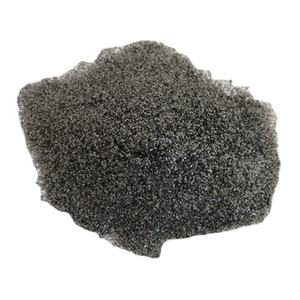
(3d printing alloy powder)
Steel 3D printing, additionally known as metal additive manufacturing (AM), is a layer-by-layer manufacture method that builds three-dimensional metallic parts directly from digital versions utilizing powdered or wire feedstock.
Unlike subtractive techniques such as milling or transforming, which get rid of material to attain shape, steel AM adds material just where needed, allowing unmatched geometric complexity with very little waste.
The procedure begins with a 3D CAD model sliced right into slim horizontal layers (normally 20– 100 µm thick). A high-energy resource– laser or electron beam of light– uniquely melts or integrates metal bits according to every layer’s cross-section, which solidifies upon cooling to form a dense strong.
This cycle repeats till the full component is created, typically within an inert environment (argon or nitrogen) to stop oxidation of responsive alloys like titanium or aluminum.
The resulting microstructure, mechanical residential or commercial properties, and surface area coating are controlled by thermal background, check strategy, and product attributes, calling for specific control of procedure criteria.
1.2 Major Steel AM Technologies
The two dominant powder-bed combination (PBF) innovations are Careful Laser Melting (SLM) and Electron Light Beam Melting (EBM).
SLM utilizes a high-power fiber laser (generally 200– 1000 W) to totally thaw metal powder in an argon-filled chamber, producing near-full density (> 99.5%) get rid of fine attribute resolution and smooth surfaces.
EBM utilizes a high-voltage electron beam of light in a vacuum atmosphere, operating at greater construct temperatures (600– 1000 ° C), which lowers recurring stress and anxiety and makes it possible for crack-resistant handling of weak alloys like Ti-6Al-4V or Inconel 718.
Beyond PBF, Directed Power Deposition (DED)– consisting of Laser Steel Deposition (LMD) and Cable Arc Additive Production (WAAM)– feeds steel powder or wire into a liquified swimming pool developed by a laser, plasma, or electric arc, appropriate for large repair work or near-net-shape components.
Binder Jetting, though less fully grown for steels, involves transferring a liquid binding agent onto metal powder layers, complied with by sintering in a furnace; it offers broadband but reduced thickness and dimensional accuracy.
Each technology stabilizes compromises in resolution, develop rate, product compatibility, and post-processing needs, assisting choice based on application demands.
2. Products and Metallurgical Considerations
2.1 Common Alloys and Their Applications
Steel 3D printing sustains a vast array of engineering alloys, consisting of stainless-steels (e.g., 316L, 17-4PH), tool steels (H13, Maraging steel), nickel-based superalloys (Inconel 625, 718), titanium alloys (Ti-6Al-4V, CP-Ti), light weight aluminum (AlSi10Mg, Sc-modified Al), and cobalt-chrome (CoCrMo).
Stainless steels supply rust resistance and moderate toughness for fluidic manifolds and medical instruments.
(3d printing alloy powder)
Nickel superalloys master high-temperature settings such as wind turbine blades and rocket nozzles because of their creep resistance and oxidation security.
Titanium alloys integrate high strength-to-density ratios with biocompatibility, making them ideal for aerospace brackets and orthopedic implants.
Light weight aluminum alloys enable lightweight architectural parts in automotive and drone applications, though their high reflectivity and thermal conductivity pose obstacles for laser absorption and thaw swimming pool security.
Product growth continues with high-entropy alloys (HEAs) and functionally rated compositions that shift residential properties within a solitary component.
2.2 Microstructure and Post-Processing Demands
The fast heating and cooling down cycles in metal AM generate distinct microstructures– usually great mobile dendrites or columnar grains lined up with warm flow– that vary considerably from cast or functioned equivalents.
While this can boost strength via grain improvement, it might also introduce anisotropy, porosity, or residual stress and anxieties that compromise exhaustion performance.
Subsequently, nearly all metal AM components need post-processing: tension alleviation annealing to decrease distortion, hot isostatic pressing (HIP) to close interior pores, machining for essential resistances, and surface area completing (e.g., electropolishing, shot peening) to enhance fatigue life.
Warm treatments are tailored to alloy systems– for example, remedy aging for 17-4PH to achieve precipitation solidifying, or beta annealing for Ti-6Al-4V to maximize ductility.
Quality control relies upon non-destructive testing (NDT) such as X-ray calculated tomography (CT) and ultrasonic assessment to spot interior flaws unseen to the eye.
3. Layout Flexibility and Industrial Effect
3.1 Geometric Technology and Functional Assimilation
Metal 3D printing unlocks style standards impossible with traditional production, such as internal conformal cooling channels in injection molds, lattice structures for weight reduction, and topology-optimized load courses that reduce product use.
Parts that as soon as needed setting up from loads of parts can currently be published as monolithic systems, reducing joints, fasteners, and potential failing factors.
This practical integration improves reliability in aerospace and clinical gadgets while cutting supply chain intricacy and inventory expenses.
Generative design formulas, paired with simulation-driven optimization, immediately create organic shapes that meet performance targets under real-world tons, pressing the limits of effectiveness.
Personalization at scale comes to be feasible– oral crowns, patient-specific implants, and bespoke aerospace installations can be generated economically without retooling.
3.2 Sector-Specific Fostering and Financial Worth
Aerospace leads fostering, with business like GE Aeronautics printing gas nozzles for jump engines– settling 20 components right into one, minimizing weight by 25%, and boosting toughness fivefold.
Medical tool suppliers take advantage of AM for permeable hip stems that motivate bone ingrowth and cranial plates matching patient anatomy from CT scans.
Automotive companies utilize steel AM for fast prototyping, light-weight braces, and high-performance racing components where performance outweighs expense.
Tooling industries take advantage of conformally cooled molds that reduced cycle times by up to 70%, boosting efficiency in mass production.
While equipment prices remain high (200k– 2M), declining prices, improved throughput, and licensed product data sources are expanding ease of access to mid-sized ventures and service bureaus.
4. Challenges and Future Directions
4.1 Technical and Accreditation Barriers
Despite development, steel AM faces obstacles in repeatability, qualification, and standardization.
Minor variants in powder chemistry, moisture material, or laser emphasis can modify mechanical homes, requiring strenuous process control and in-situ monitoring (e.g., melt swimming pool cams, acoustic sensing units).
Certification for safety-critical applications– particularly in aeronautics and nuclear sectors– calls for comprehensive analytical recognition under structures like ASTM F42, ISO/ASTM 52900, and NADCAP, which is time-consuming and costly.
Powder reuse procedures, contamination risks, and absence of global material specs better make complex industrial scaling.
Efforts are underway to establish electronic twins that connect procedure specifications to part performance, allowing predictive quality control and traceability.
4.2 Arising Fads and Next-Generation Systems
Future advancements consist of multi-laser systems (4– 12 lasers) that drastically raise build prices, hybrid makers incorporating AM with CNC machining in one system, and in-situ alloying for custom compositions.
Expert system is being integrated for real-time defect detection and flexible criterion adjustment throughout printing.
Lasting initiatives concentrate on closed-loop powder recycling, energy-efficient beam of light sources, and life process analyses to measure environmental advantages over conventional approaches.
Research study into ultrafast lasers, chilly spray AM, and magnetic field-assisted printing may overcome existing restrictions in reflectivity, recurring stress, and grain alignment control.
As these developments mature, metal 3D printing will shift from a niche prototyping tool to a mainstream production approach– improving how high-value steel parts are designed, produced, and deployed across industries.
5. Provider
TRUNNANO is a supplier of Spherical Tungsten Powder with over 12 years of experience in nano-building energy conservation and nanotechnology development. It accepts payment via Credit Card, T/T, West Union and Paypal. Trunnano will ship the goods to customers overseas through FedEx, DHL, by air, or by sea. If you want to know more about Spherical Tungsten Powder, please feel free to contact us and send an inquiry.
Tags: 3d printing, 3d printing metal powder, powder metallurgy 3d printing
All articles and pictures are from the Internet. If there are any copyright issues, please contact us in time to delete.
Inquiry us